Su Vista Marketing For Roofers
Marketing For Roofers By Roofers

SEO Friendly Roofing Website Design
A roofing website should do more than look good. It should help homeowners understand your services, trust your roofing company, and contact your team without friction. If the website looks polished but does not bring in calls, form submissions, or quote requests, it is not doing its job.
Good roofing website design connects two important goals. The website needs to look professional for real people, and it also needs the right seo structure for google. When both work together, your roofing business has a stronger chance of showing up, earning trust, and turning visitors into leads.
For many roofing companies, the website is the first serious impression a customer gets. Before they call, they may compare your roofing services, read reviews, check photos, look at your service areas, and decide whether your roofing company feels reliable. That means the site has to be built with both search visibility and customer confidence in mind.
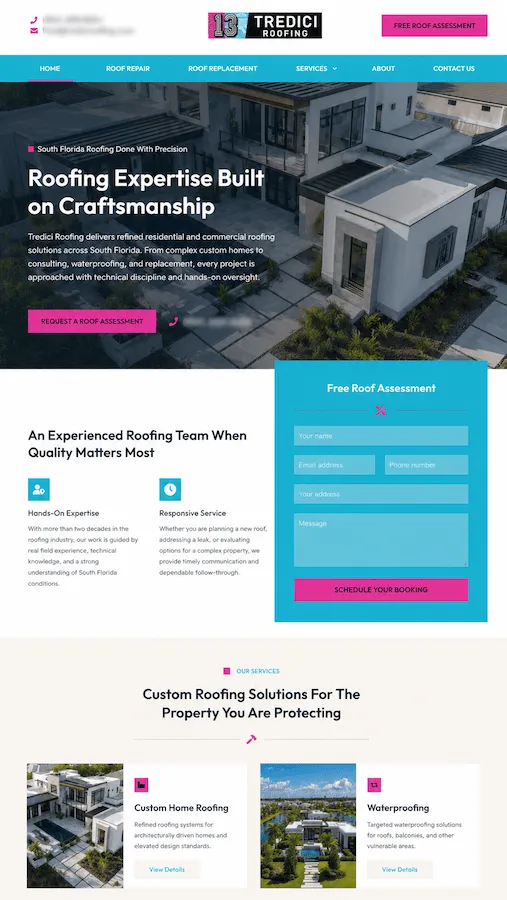
Why Roofing Website Design Matters for Search Engine Optimization
A roofing website can have great visuals and still fail if the structure is weak. Google needs to understand what your website is about, where your roofing company works, and which services you provide. Customers need that same clarity.
That is why SEO friendly design starts before the first is written. It starts with the layout, page structure, navigation, headings, calls to action, service pages, and local content. A well-designed roofing website makes it easy for Google to crawl the site and easy for customers to take the next step.
The strongest roofing websites are built around real buying behavior. A homeowner with a leak is not browsing for fun. They need roof repair help quickly. A customer planning a full replacement wants proof that the roofing contractor understands materials, warranties, pricing, and installation. A business owner looking for commercial roofing needs clear information about experience, safety, and project planning.
Your website should guide each visitor toward the right answer.
Start With a Clear Business Website Structure
The structure of your website affects both SEO and user experience. If all services are packed onto one page, Google has less context. If the navigation is confusing, customers leave before they call.
A strong roofing website should have separate pages for your most important services. Roof replacement, roof repair, emergency roofing, inspections, maintenance, gutters, siding, and storm damage should not all be buried in one paragraph. Each deserves enough space to explain what the customer needs to know.
This also helps your website target more searches. A roof repair page can focus on leak issues, missing shingles, damage, and urgent help. A roof replacement page can focus on materials, process, financing, warranties, and timelines. A storm page can explain insurance-related concerns and emergency response. It helps the customer find the service they need without digging.
Build Roofing Service Pages That Help Customers Make a Decision
Service pages carry a lot of weight on a roofing website because they are often where interest turns into action. A homeowner may already know they need help, but they still need to understand what the service includes, whether it applies to their problem, and why your roofing company is the right one to call.
That means each page should do more than list what you offer. It should explain the problem, the process, the options, and the next step. A roof repair page, for example, should show how your team tracks down the source of a leak, checks the surrounding roof area, and recommends a repair that addresses the actual issue. A roof replacement page should walk through the inspection, tear-off, underlayment, ventilation, flashing, cleanup, and warranty expectations.
This kind of content helps customers feel informed before they reach out. It also gives Google clearer context about each service, which supports stronger SEO. The goal is not to overwhelm the reader with technical details. The goal is to answer the questions they are already asking and remove the hesitation that keeps them from calling.
A roofing website that explains its services clearly will usually do more than a site filled with thin copy and repeated “call today” buttons. Good service pages build trust, support search visibility, and help turn visitors into better-quality leads.
Make Local Roofing SEO Part of the Design
Most roofing leads come from local searches. That means your website should make your location, service areas, and local relevance obvious.
Your landing page should clearly mention the main area you serve. Your service pages should connect your roofing services to your local market where it makes sense. Location pages can also help when they are written with useful local information, not copied text with the city name swapped out.
Google looks for consistency. Your website, Google Business Profile, directories, reviews, and online mentions should all support the same business information. If your roofing company serves multiple areas, your site should make that clear in a clean and organized way.
Do not overdo it with city names. Local SEO works better when the page is genuinely helpful. Mention nearby areas naturally. Talk about common roofing problems in the region. Explain weather concerns, material choices, storm patterns, or permit considerations when relevant.
A Professional Website has Well-Written Roofing Content
A roofing website needs SEO-driven content that helps your site rank, but it cannot sound robotic. Search engines needs clarity, but homeowners need simple explanations.
This is where many roofing websites fall apart. The copy gets stuffed with keywords, but it does not help the reader. That kind of content may technically mention roofing enough times, but it does not build confidence.
Good website copy should use keyword terms, location terms, and customer-focused language in a natural way. It should explain roofing problems, options, processes, and next steps. It should also help the customer understand why the company is qualified to help.
For example, instead of saying “we offer the best roofing services,” explain how inspections work, what your crew checks, what materials you install, and how customers know what to expect. Specific information is stronger than empty claims.
A roofing website that sounds helpful will do more for marketing than a page full of vague sales language.
Connect Design With Conversion
An SEO-friendly website still has to turn visitors into leads. Rankings can bring people to the page, but the design has to help them take the next step. If a homeowner lands on your site and cannot quickly figure out how to call, request an estimate, or schedule an inspection, the page is creating friction instead of opportunity.
Every important page should have a clear path forward. That does not mean filling the layout with oversized buttons or repeating the same call to action after every paragraph. It means placing the right next step where it naturally fits. A roof repair page may need a visible phone number. A replacement page may need an estimate form. A financing section should make it easy to ask about payment options.
This matters even more on mobile. Many roofing customers search while dealing with an active problem, especially when there is a leak or storm damage. The phone number should be easy to tap. Forms should be short. Buttons should use direct language. The page should help the customer act without making them dig.
Good conversion design supports SEO because it improves the user experience. When people stay on the website, visit more pages, and take action, the site becomes more valuable to the business. The goal is simple: make the roofing website easy to find, easy to trust, and easy to contact.
Make the Website Mobile-Friendly
Most customers will not see your website on a desktop first. They will find your roofing company on a phone, often through search engines. If the mobile experience is slow, crowded, or hard to use, you will lose leads.
A mobile-friendly roofing website should load quickly, show the phone number clearly, keep buttons easy to tap, and avoid huge blocks of text. The design should make the most important information visible without forcing the customer to scroll forever.
Photos should be optimized so they look good without slowing down the site. Forms should be short enough to complete quickly. Menus should be simple.
Mobile design matters for SEO because Google evaluates the mobile version of the website. It also matters for sales because roofing customers are often searching while dealing with an active problem.
Use Roofing Photos That Support the Message
Customers want to see that your company does real work, handles projects like theirs, and can deliver the result you are promising on the page.
Stock photos can make a website look polished, but they rarely build the same trust as real project images. A stronger website uses actual jobsite photos, completed roofs, crew photos, material close-ups, before-and-after examples, and images that show the details of the work. Those photos make the company feel more credible because they show experience instead of just claiming it.
Photos can also support SEO when they are used correctly. Clear file names, helpful alt text, captions, and nearby page content can help Google understand what the image shows. More importantly, the right photos help customers understand the service faster. A roof repair page should show repair-related work. A roof replacement page should show completed replacement projects. A metal roofing page should show metal roofing, not a generic shingle roof.
This matters even more for roofing companies with multiple services. Every page should have visuals that match the service being sold. Residential pages should show residential projects. Storm damage, flat roofing, roof repair, and replacement pages should each have images that support that specific topic. When the visuals match the message, the website feels more trustworthy, more useful, and more likely to turn visitors into leads.
Well-Designed Roofing Sites are Customized to Your Business
A roofing site can start with a template, but it should never feel like a copy-and-paste site. The problem is not the framework. The problem is using the same photos, descriptions, headlines, and same empty promises that every other contractor uses.
Customers notice when a website feels generic. It may look clean, but it does not give them a strong reason to trust the company. It does not explain how the contractor works, what services they specialize in, what areas they know, or what kind of projects they handle best.
A stronger roofing site should feel tied to the actual business. It should reflect the company’s service mix, local market, process, team, certifications, project photos, reviews, and real selling points. The content should make it clear why this roofing company is different from the next one a customer sees on Google.
This is where design and strategy need to work together. A good roofing site is not just a nice layout with roofing words added later. It should help Google understand the company’s services, locations, and expertise. It should also help customers feel like they are choosing a real contractor, not a random company with a polished template.
If the same website could be reused for a roofing company in any city, it is not specific enough. A strong site should feel local, credible, and connected to the contractor behind it.
Build the Roofing Site Around the Customer Journey
Most customers do not land on one page and call right away. They look around first. They compare services, read reviews, check project photos, and try to decide whether the company feels trustworthy. Your website should guide that process instead of leaving people to figure it out on their own.
A homeowner may start with a blog about roof leak signs. From there, they may visit the roof repair page, look at completed projects, read warranty information, check financing options, and then make the call. Each page should answer the next natural question and move the visitor closer to taking action.
That is why internal linking matters. Blog pages should point readers toward the right service pages. These should connect to reviews, financing, warranties, project photos, and relevant location pages. Location pages should lead visitors back to the main services they may need.
A strong internal structure helps visitors move through the site with less friction. It also helps Google understand how your roofing website is organized. Instead of feeling like a collection of disconnected pages, the website becomes a clear path from research to trust to contact.
Include SEO in Roofing Web Design From the Start
A new professional website should not launch first and get “fixed for SEO” later. That approach usually creates extra work, weak pages, and missed opportunities. The better move is to have all SEO components built-in the website from the beginning.
That starts with the basics: clean page titles, meta descriptions, clear headings, simple URLs, internal links, image optimization, mobile-friendly layouts, fast load speed, location signals, and organized site content. Schema can also help when it fits the page and the business.
These pieces may not be obvious to customers, but they affect how well the website performs. A roofing site can look professional and still struggle if the structure is messy, the pages load slowly, the headings are unclear, or the content does not give Google enough context.
A roofing SEO company should know how to connect all of these parts. The design, content, technical setup, and local marketing strategy should work together toward one goal: helping the right roofing leads find the business and take action.
Use Blog Content to Support the Main Pages
Blogs should not be random. They should support the core services that matter most to the roofing company.
If roof replacement is a priority, the blog can answer questions about cost, materials, timing, signs of failure, warranties, and ventilation. If roof repair is a priority, the blog can cover leaks, flashing, missing shingles, storm damage, and emergency steps. If maintenance is a priority, the blog can explain inspections, cleaning, gutter issues, and seasonal care.
They support the main service pages by giving a search engine more context about your expertise. The key is to connect blog content back to the correct service page. A blog should educate first, but it should still give the reader a clear next step.
Why Google Business Profile Still Matters
Your Google Business Profile and website should work together. A customer may find your profile first, then click to the site. Or they may visit the website first, then check your profile for reviews.
The information should match. The business name, address, phone number, categories, services, photos, and service areas should be consistent. Inconsistent information can weaken trust and create confusion.
Google also pays attention to activity. Add photos, request reviews, answer questions, and keep your profile updated. These actions support your local marketing and help customers see that the business is active.
Your website should also link naturally to the profile when appropriate. Reviews and local proof can strengthen the customer’s confidence before they call.
What Roofing Websites Should Include
A strong roofing business website does not need to be complicated, but it does need the right foundation. The most important features include simple navigation, clear service pages, strong local content, fast mobile performance, real project photos, reviews, calls to action, optimized headings, and helpful copy.
The site should make it easy for a search engine to understand your business. It should make it easy for customers to understand your services. It should also make it easy for people to contact you.
That is the real purpose of SEO-friendly roofing web design. It connects visibility, trust, and lead generation into one system.
Su Vista, Marketing for Roofers
For roofing companies, the website should be one of the strongest digital marketing assets in the business. When the design, SEO, content, photos, and conversion strategy work together, the site can attract better leads and help turn more visitors into clients. Su Vista helps roofers build websites around that exact goal, combining clear messaging, local SEO, and contractor-focused marketing strategy so the website does more than look good. It helps the roofing business get found, earn trust, and generate real opportunities.
Free Strategy Call - Book Today
You will walk away with a plan for how to grow to the next level for your company.